Why Is My Power Strip Surging And Tripping The Breaker?
Your lights blink. The power strip clicks off. Then the breaker in your panel snaps with a loud thud. If this keeps happening, you are not alone, and the problem is fixable.
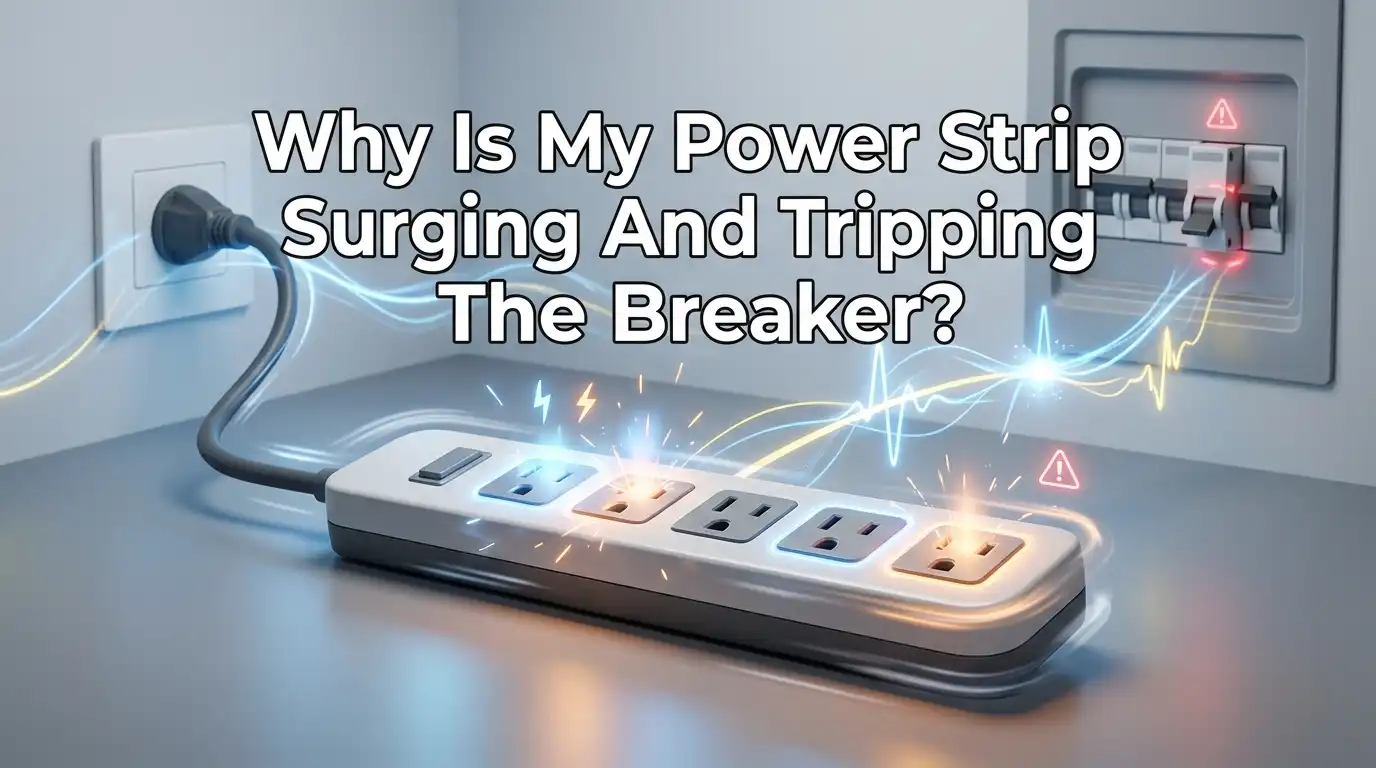
A power strip that surges and trips the breaker is sending you a clear warning. It tells you that something on that circuit needs your attention right now.
This guide walks you through every common cause in plain language. You will learn how to spot an overload, test for a faulty strip, and stop the tripping for good. Each section gives you simple steps you can follow today. By the end, you will know exactly what is wrong and how to fix it safely.
Key Takeaways
- Overloading is the number one cause. Most power strips handle around 1800 watts total. Plug in too many high power devices and the breaker trips to protect you.
- Power strips are not power multipliers. They split one outlet into many, but they do not give you more electricity. The total draw still flows through one wall socket.
- Daisy chaining is dangerous. Plugging one power strip into another stacks the load and creates a real fire hazard. Never do it.
- High heat appliances cause most trips. Space heaters, microwaves, hair dryers, and toasters pull huge current. Plug these straight into the wall instead.
- A worn out strip can trip on its own. Burn marks, a melted smell, heat, or loose plugs all mean the strip is failing. Replace it without delay.
- Some trips signal deeper wiring faults. If the breaker trips even with little load, you may have a short circuit or ground fault that needs an electrician.
What Actually Happens When Your Power Strip Trips The Breaker
A breaker trip is a safety action, not a random glitch. Your circuit breaker watches the flow of electricity. When the current climbs past its safe limit, usually 15 or 20 amps in a home, it cuts the power fast. This stops wires from overheating and starting a fire.
A power strip sits between your wall outlet and your devices. It does not create power. It only shares one outlet among several plugs.
When the combined demand of your devices crosses the breaker limit, the breaker trips. The strip is often just the messenger. The real issue is the total load on that single circuit. Understanding this difference helps you aim your fixes at the right target.
Cause One: You Are Overloading The Power Strip
Overloading is the most frequent reason for a trip. Every device you plug in draws current. Add them together and the number grows fast.
A typical power strip handles about 1800 watts, which equals roughly 15 amps on a standard outlet. Push past that and something has to give.
Think about what you have plugged in. A computer, a monitor, a printer, and a phone charger are usually fine together. But add a heater or a kettle and you blow past the limit instantly.
Heat producing devices are the worst offenders. To stay safe, add up the wattage of everything on the strip and keep the total well under 1800 watts.
Pros of watching your load: it is free, fast, and prevents fires. Cons: you may need to move some devices to other outlets, which can feel inconvenient at first.
Cause Two: You Plugged In High Wattage Appliances
Some appliances simply do not belong on a power strip. A space heater alone can pull 12 to 15 amps, which fills almost the entire circuit by itself.
Microwaves, toasters, hair dryers, air fryers, and irons all draw heavy current to make heat. These devices heat the strip and its thin wiring far beyond safe levels.
The fire department warns against this for good reason. A space heater on a cheap strip can melt the plastic and start a fire even before the breaker reacts.
Always plug heat producing appliances directly into a wall outlet. Give them their own dedicated socket whenever you can. This single habit prevents a huge share of trips and protects your home.
Pros of removing heavy appliances: dramatic drop in tripping and fire risk. Cons: you give up the convenience of one central strip for everything.
Cause Three: You Are Daisy Chaining Power Strips
Daisy chaining means plugging one power strip into another to get more outlets. It looks harmless, but it is a serious hazard. Each strip adds its own load, yet all that current still passes through one wall outlet. The wiring was never built to carry that much.
This practice is banned in most workplaces by safety codes for a reason. Stacked strips overheat, melt, and can ignite long before the breaker saves you.
Even when the breaker does trip, the strips have already been stressed. The smart move is simple. Use one strip per wall outlet. If you need more outlets, ask a licensed electrician to install them.
Pros of stopping daisy chains: you remove a top fire cause and reduce trips. Cons: you may have fewer outlets than you want until you add more wall sockets.
Cause Four: A Faulty Or Worn Out Power Strip
Power strips do not last forever. The internal parts wear down with age, heat, and use. A failing strip can trip the breaker even with a light load. Look for clear warning signs.
A burning smell, warm plastic, discoloration, scorch marks, or plugs that no longer stay tight all point to a dying strip.
Surge protectors also weaken over time. The internal components that absorb spikes degrade after several years or a few big surges.
If your strip is more than three to five years old, or shows any damage, replace it. Do not try to repair it yourself. A new, quality strip with a proper rating costs little and removes the risk entirely.
Pros of replacing: instant peace of mind and safer power. Cons: a small cost and the task of finding a properly rated unit.
Cause Five: The Strip’s Built In Breaker Is Doing Its Job
Many power strips have their own small circuit breaker inside. You can spot it as a reset button, often red, on the side or top. This little breaker trips before your house breaker when the strip senses too much current. That is a feature, not a flaw. It protects the strip and your home.
If only the strip shuts off and your wall outlet still works, the strip breaker did its job. Unplug a few devices, wait a minute, then press the reset button. Power should return.
If it trips again right away, you are still overloading it or the strip is faulty. Treat repeated trips as a signal to reduce load, not a reason to keep resetting.
Pros of the reset button: quick recovery and built in protection. Cons: it can hide an overload problem if you reset without removing devices.
Cause Six: A Short Circuit On The Circuit
Sometimes the trip has nothing to do with overload. A short circuit happens when a hot wire touches a neutral wire or bare metal directly.
This sends a sudden, massive surge of current that trips the breaker instantly. A short circuit trip is fast and often comes with a spark, a pop, or a burning smell.
The fault may sit inside a frayed cord, a damaged plug, or a broken device plugged into the strip. Unplug everything, then plug devices back in one at a time to find the culprit.
When the breaker trips as you add one specific item, that device or its cord is likely the problem. Stop using it and have it repaired or replaced.
Pros of this test: it pinpoints the faulty item cheaply. Cons: it takes patience and you handle live plugs, so work carefully.
Cause Seven: A Ground Fault Or Leaking Current
Ground faults are a different beast from overloads. A ground fault happens when current escapes its proper path and leaks to ground, often through moisture or damaged insulation.
GFCI outlets and breakers watch for this leak and trip fast to prevent shock. They do not trip for simple overloads.
If your strip sits in a damp spot, near a sink, in a garage, or in a basement, water may be the cause. A failing surge protector can also leak current to ground and trigger a GFCI.
Keep power strips dry and away from water at all times. If a GFCI keeps tripping with the strip plugged in, test the strip elsewhere. A leaking strip needs to be replaced right away.
Pros of GFCI protection: it guards against deadly shocks. Cons: nuisance trips can frustrate you until you find the moisture or faulty unit.
How To Find Which Device Is Causing The Trip
A simple test reveals the guilty device fast. Start by unplugging every device from the power strip. Reset the breaker so power returns. Now you have a clean slate. This step alone tells you whether the load or the strip is the issue.
Next, plug your devices back in one by one. Wait a moment after each one. Watch for the exact moment the breaker trips, because that device or that combination is your answer.
If a single high wattage item trips it alone, move that item to its own outlet. If the trip comes only after several devices, you have a total overload. Spread those devices across different circuits in your home to balance the load.
Pros of this method: it is precise and costs nothing. Cons: it takes time and a bit of trial and error.
How To Calculate A Safe Load For Your Power Strip
A little math keeps you safe for good. Find the wattage label on each device, usually on a sticker or in the manual. Add up the watts of everything you want on one strip.
Keep the total comfortably below 1800 watts, and aim lower for older wiring. A safe target is to stay under 80 percent of the limit.
If your devices list amps instead of watts, multiply the amps by your voltage, around 120 in the United States, to get watts.
For example, a 10 amp device draws about 1200 watts, which already fills most of one strip. Knowing these numbers helps you plan. You will never guess again. You will know before you plug in whether the strip can handle the load.
Pros of calculating: total confidence and zero surprise trips. Cons: it requires a few minutes and reading small labels.
Smart Habits To Stop Power Strip Trips For Good
Good habits prevent most problems before they start. Always plug heat producing appliances straight into the wall. Never chain strips together. Keep strips dry and in open air so heat can escape. Dust and lint buildup can also cause heat, so wipe your strips clean now and then.
Spread your devices across several outlets and circuits instead of crowding one strip. Buy strips that match your real needs, with the right wattage rating and built in overload protection.
Replace any strip that feels warm, smells odd, or shows wear. Check the age of your surge protectors and swap them every few years. These small actions add up to a home that rarely, if ever, trips a breaker.
Pros of good habits: lasting safety and fewer headaches. Cons: it asks for a bit of ongoing attention and planning.
When To Call A Licensed Electrician
Some problems sit beyond a quick fix. If your breaker trips even with very little plugged in, the wiring or the breaker itself may be faulty. A breaker that feels hot, buzzes, or trips for no clear reason needs a professional eye. Do not ignore these signs.
Call a licensed electrician when you face repeated trips after you have reduced the load and tested every device. They can check for loose connections, worn breakers, and overloaded circuits inside your walls.
An expert can also add new outlets or a dedicated circuit so you stop relying on crowded strips. This is the safest path when the cause hides inside your home’s wiring rather than on the strip itself.
Pros of calling a pro: they fix root causes and ensure safety. Cons: it costs money and you must schedule a visit.
Frequently Asked Questions
Why does my power strip trip the breaker only when I turn on one device?
That device likely draws a large surge of current at startup, or it has an internal fault. Heat producing items and motors spike when they switch on. Move it to its own wall outlet and test again.
Can a bad power strip trip the breaker by itself?
Yes. A worn or damaged strip can leak current or short internally, which trips the breaker even with a small load. Burn marks, heat, or odd smells confirm the strip has failed. Replace it.
Is it safe to keep resetting the breaker after it trips?
No. A breaker trips to protect you from overload or a fault. Repeated resetting without fixing the cause stresses the wiring and raises fire risk. Find and fix the cause first, then reset.
How many devices can I safely plug into one power strip?
There is no fixed number. What matters is the total wattage, which should stay under about 1800 watts. Many low power devices are fine. One or two high power appliances can already exceed the limit.
Why does my surge protector trip but the wall outlet still works?
Your strip has its own internal breaker that tripped before the house breaker. Press the reset button after unplugging a few devices. If it trips again fast, reduce the load or replace the strip.
Does plugging a space heater into a power strip cause tripping?
Yes, very often. A space heater can draw nearly the full circuit limit on its own. It overheats the strip and trips the breaker. Always plug space heaters directly into a wall outlet.
Final Thoughts
A power strip that surges and trips the breaker is solving a problem, not creating one. It protects you from overloaded wires and possible fire. Your job is to listen to that warning and act. Start by reducing the load and moving heavy appliances to the wall.
Test your devices one at a time to find any faulty item. Replace worn strips, stop daisy chaining, and keep everything dry. If trips continue with a light load, call an electrician to check your wiring. Follow these steps and your power strips will run cool, quiet, and safe for years to come.

Hi, I’m Frankie Shaw, the founder and writer behind Swittchly 👋. I’m a passionate tech enthusiast who loves exploring the latest gadgets, devices, and electronics that hit the market. Through my honest, research-backed Amazon product reviews, I help readers make smarter buying decisions without the hype or confusion.