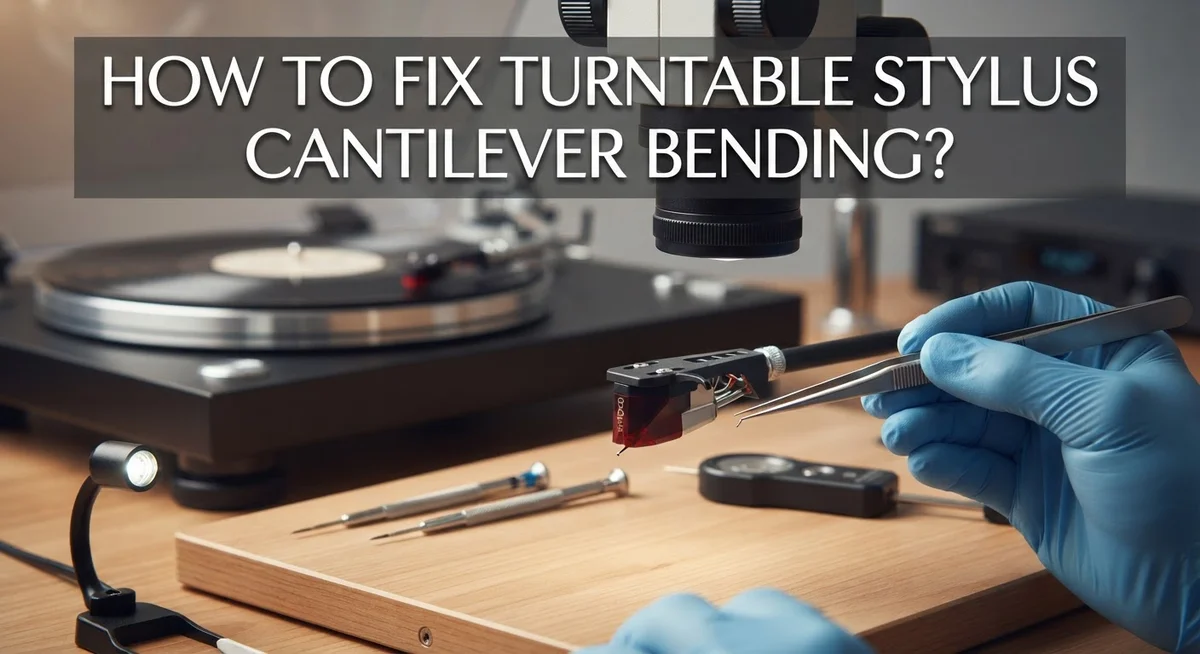
How To Fix Turntable Stylus Cantilever Bending?
A bent stylus cantilever can turn your favorite record into a distorted mess. This tiny part sits at the heart of your turntable’s sound quality. Even a slight bend can cause skipping, muffled audio, or permanent damage to your vinyl collection.
Many vinyl lovers panic when they notice this problem. The good news is that you can often fix minor bends yourself. You just need patience, steady hands, and the right approach.
This guide will walk you through everything you need to know. We will cover how to spot a bent cantilever early. You will learn simple techniques to straighten it safely.
We will also discuss when a repair makes sense versus when replacement is your best option. Understanding the difference can save you time and money.
By the end of this article, you will feel confident handling this delicate repair. You will know exactly what tools to use and what mistakes to avoid.
Let’s get your turntable sounding perfect again.
In a Nutshell
A bent cantilever needs careful attention before you touch anything. Here is a quick summary of the key steps.
-
Check the damage first. Look at the cantilever under bright light. A slight bend often looks different from a full break.
-
Turn off your turntable immediately. Playing a record with a bent cantilever causes more harm to your stylus and your vinyl.
-
Try gentle realignment for minor bends. Small bends sometimes respond to careful, slow adjustments using proper tools.
-
Know when to call a professional. Severe bends or cracks usually need expert repair or a full stylus replacement.
-
Test sound quality after any fix. Play a familiar track and listen closely. Distortion means the problem still exists.
-
Prevent future bending with proper care. Keep dust off your stylus and handle your tonearm gently every time.
Patience matters during this whole process. Rushing can turn a small bend into a bigger problem. Follow each step carefully, and your turntable will sound clear again soon.
Understanding the Cantilever and Its Role in Sound Quality
The cantilever is the thin arm that holds your stylus in place. This small component plays a huge role in how your records sound. When the cantilever bends, sound quality suffers immediately.
The cantilever connects your stylus to the cartridge body. This connection must stay perfectly aligned for accurate sound reproduction. Even tiny misalignments cause tracking problems. Your records won’t sound right.
A bent cantilever creates several sound issues. Distortion becomes noticeable on both channels. Bass sounds muddy or unclear. High notes may crack or pop unexpectedly. Some people describe the sound as “fuzzy” or “muffled.” These problems happen because the stylus can’t sit properly in the record groove.
Understanding this relationship helps you recognize problems early. The stylus rides through grooves with precision. The cantilever must support this movement without flexing. When it bends, the stylus angle changes. This angle change prevents the stylus from reading groove information correctly.
The cantilever’s material matters too. Most cantilevers use aluminum or sapphire. These materials are strong but still vulnerable to damage. They can bend from pressure, accidental drops, or rough handling. Temperature changes sometimes affect them as well.
Your stylus pressure also impacts cantilever health. Too much pressure forces the stylus deeper into grooves. This extra force stresses the cantilever. Over time, stress leads to bending. Proper tonearm setup prevents this damage.
Think of the cantilever as the bridge between your cartridge and your records. When this bridge fails, communication breaks down. Your turntable can’t deliver the sound quality you deserve. This is why catching cantilever problems early matters so much.
Common Causes of Stylus Cantilever Bending
A bent stylus cantilever happens for several reasons. Understanding these causes helps you prevent future damage and protect your vinyl collection.
Direct contact with records is the most common culprit. If your tonearm accidentally drops or makes sudden contact with a spinning record, the stylus cantilever bends immediately. This happens in seconds and causes permanent damage.
Improper handling of your turntable creates risk too. Moving your equipment while it’s playing, bumping the tonearm, or applying too much pressure during setup can all bend the cantilever. Rough movements are the enemy of precision equipment.
Excessive stylus pressure gradually weakens the cantilever over time. If your tracking force is set too high, the constant downward stress bends the thin metal arm. This happens slowly, so you might not notice until damage becomes severe.
Dust and debris build up on the stylus and create problems. Particles stuck in the grooves increase friction and pressure. This extra force bends the cantilever during normal play.
Temperature changes affect the metal structure. Extreme heat or cold makes the cantilever brittle and more prone to bending. Storing your turntable in unstable environments increases this risk.
Worn records with deep scratches or warped vinyl also contribute. These imperfections force your stylus to work harder and bend the cantilever unnaturally.
Manufacturing defects occasionally cause weak cantilevers from the start. Some cartridges have structural issues that make bending more likely.
Stacking records improperly or placing heavy objects on your turntable creates downward pressure. This weight transfers to the stylus and bends the cantilever over time.
Knowing these causes lets you take action now. Simple prevention habits protect your equipment and keep your records sounding clear.
How to Inspect Your Stylus for Cantilever Damage
Start your inspection with a visual check under bright light. Use a magnifying glass or jeweler’s loupe to examine the cantilever closely. Look for any visible bends, twists, or angles that seem wrong compared to the other side.
The cantilever should appear perfectly straight when you view it from the side. Check if it leans left or right when viewed from above. Any deviation from straight indicates damage that needs attention.
Gently move the tonearm across the record surface without playing anything. Listen carefully for scratching sounds that shouldn’t be there. A bent cantilever often creates unusual noise during this test.
Place a record on the turntable and lower the stylus slowly without starting playback. Watch how the stylus makes contact with the vinyl. The needle should touch down smoothly and sit centered in the groove. If it angles awkwardly or touches the record at odd points, your cantilever likely has a bend.
Play a test record you know well and listen for distortion or skipping. Bent cantilevers cause the stylus to track poorly through grooves. You’ll hear crackling, popping, or uneven sound across both channels.
Feel the tonearm’s movement as it travels across the record. Resistance or stuttering motions suggest cantilever problems. Smooth, consistent movement indicates everything works correctly.
Check the stylus tip itself for visible wear or flattening. A damaged tip often accompanies a bent cantilever. Compare your stylus to a new one if possible.
Document what you find with notes or photos. This information helps you decide whether repair or replacement makes sense for your situation.
Step-by-Step Guide to Straightening a Bent Cantilever
A bent cantilever requires careful attention and patience. Do not attempt aggressive straightening methods that could cause permanent damage. The goal is gentle realignment using proper technique.
First, remove the cartridge from your tonearm. Most cartridges use two or three small screws that hold them in place. Keep these screws in a safe location. You will need them later for reinstallation.
Place your cartridge on a clean, flat work surface. Use a magnifying glass or jeweler’s loupe to examine the cantilever closely. The bent section should become visible under magnification. Take your time with this inspection step.
Gently warm the cartridge area by holding it under warm (not hot) running water for 30 seconds. Warm metal becomes slightly more flexible. This small temperature increase helps without causing damage. Pat the cartridge dry with a soft cloth.
Using a very fine needle or specialized straightening tool, apply minimal pressure to the bent area. Push slowly in the opposite direction of the bend. Make small adjustments rather than one large movement. Check your progress frequently with the magnifying glass.
Allow the cartridge to cool completely at room temperature. Cooling helps the metal hold its new position. This waiting period takes about 15 minutes.
Reinstall the cartridge onto your tonearm using the original screws. Tighten each screw evenly and gently. Uneven tightening can cause new bending.
Test your turntable with a record you know well. Listen for improved sound quality and reduced distortion. The stylus should track smoothly without skipping.
If bending returns quickly or if you cannot straighten the cantilever, replacement becomes your best option. Some cartridges allow stylus replacement separately. Others require full cartridge replacement for safety and sound quality.
Tools and Precautions Needed Before Attempting a Repair
Before you attempt any cantilever repair, gather the right tools and take proper safety steps. Having everything ready prevents accidents and protects your equipment from further damage.
Essential tools include a magnifying glass or jeweler’s loupe for detailed inspection work. You need bright lighting to see the cantilever clearly. A fine needle or specialized straightening tool helps apply gentle pressure without causing more harm. Keep a clean, soft cloth nearby for handling components without leaving fingerprints or oils.
Prepare a flat, stable work surface in a dust free area. Your workspace should have good ventilation and steady lighting. A small bowl of warm water helps with the warming process during straightening attempts.
Safety precautions matter greatly for this delicate work. Never rush through any step. Avoid using excessive force on the cantilever, as it bends easily. Wear clean hands or lightweight gloves to prevent transferring dirt to the stylus or cartridge.
Disconnect your turntable from power before removing the cartridge. This prevents accidental movement of the tonearm during your work. Keep children and pets away from your workspace.
Handle the cartridge with extreme care since the cantilever is fragile. Support the entire cartridge properly when removing it from the tonearm. Never touch the stylus tip directly with bare hands.
Document your starting point with photos or notes before making any adjustments. This helps you track changes and know when to stop trying. If you feel uncertain at any point, step back and reassess rather than forcing anything.
Have replacement options researched beforehand. Sometimes a bent cantilever cannot be safely straightened, and knowing your alternatives saves time and frustration later.
When Cantilever Damage Cannot Be Fixed
Sometimes a bent cantilever simply cannot be repaired. You need to recognize when fixing it becomes impossible so you don’t waste time or risk causing more damage.
The first sign is permanent bending that returns immediately. If you straighten the cantilever and it bends again within hours or days, the metal has lost its structural integrity. This means the material has been stressed too many times and no longer holds its shape.
Another indicator is visible cracks or breaks in the cantilever itself. Small fractures often appear near the stylus tip or where the cantilever connects to the cartridge body. Once cracked, the cantilever cannot function properly and poses a risk to your records.
Severe bending angles also signal irreparable damage. If the cantilever bends at more than 45 degrees from its correct position, attempting to straighten it usually causes cracking. The metal becomes too brittle to flex safely back into place.
Listen for persistent distortion that doesn’t improve after straightening attempts. If your records still skip, crackle, or sound muffled even after you’ve carefully straightened the cantilever, the damage goes deeper than simple bending.
When you notice these signs, replacement is your only real option. Continuing to use a damaged cantilever will scratch your records and produce poor sound quality. The stylus won’t track properly across the grooves, which accelerates wear on both your records and the cartridge itself.
Accept when a repair reaches its limits. A new cartridge costs less than replacing damaged records. Your turntable will sound better and your record collection stays protected when you make this practical choice.
Preventing Future Cantilever Bending and Stylus Damage
Preventing future cantilever bending starts with understanding what causes the damage in the first place. Most bending happens from dropping the tonearm, playing warped records, or placing the stylus on the record too forcefully. You can eliminate these problems through simple habits.
Always lower the tonearm gently onto your record. Use the cueing lever if your turntable has one. This small device lets you control the descent smoothly and safely. Never drop the tonearm from any height.
Check your records before playing them. Warped vinyl puts uneven pressure on the stylus and cantilever. Hold records up to light and look for visible bends or waves in the vinyl. Set aside any damaged records.
Keep your turntable on a stable, level surface. An uneven table causes the tonearm to sit at the wrong angle. This puts stress on the cantilever during normal play. Use a level tool to check your turntable placement.
Store your turntable with the tonearm secured in its rest position. An unsecured arm can swing freely and strike the platter or records. This impact causes serious cantilever damage.
Clean your stylus regularly with a proper brush. Dust buildup forces the stylus to sit deeper in the record groove. This extra pressure damages the cantilever over time.
Handle your cartridge with respect during installation and removal. Support the cartridge body, never the cantilever. Even small bumps or drops can bend this fragile part.
Develop a routine care schedule for your equipment. Check your stylus angle monthly. Listen for any changes in sound quality. Catching problems early prevents major damage and keeps your turntable playing beautifully for years.
Troubleshooting Persistent Tracking and Sound Issues
When your turntable stylus produces skipping, jumping, or unusual distortion sounds, a bent cantilever often causes the problem. Tracking issues typically appear as the stylus fails to follow record grooves properly. The needle may skip entire sections of your music or produce crackling that wasn’t there before.
Listen carefully to how the distortion sounds. If the problem occurs consistently in the same spots on multiple records, your cantilever likely has a bend. Persistent tracking problems that worsen over time signal progressive damage.
Check if the stylus sits at an odd angle when you inspect it under magnification. A bent cantilever causes the needle to point sideways rather than straight down into the grooves. This misalignment prevents proper contact with the record surface.
Play a record you know very well and pay attention to specific symptoms. Does the tonearm skip during quiet passages? Does it struggle through bass heavy sections? These signs point to cantilever bending rather than other turntable issues.
Sound quality changes often reveal cantilever problems before visible damage appears. Your music may sound thin, lack bass response, or have missing high frequencies. The stereo separation might collapse, making everything sound mono.
Test your turntable with different records to rule out record defects. If multiple records produce the same tracking issues, your cantilever needs attention. Compare the sound to how it performed before the problem started.
Document these symptoms with notes or recordings. This information helps you decide whether straightening the cantilever is worth attempting or if replacement makes more sense. Understanding exactly what’s wrong guides your next repair steps.
Final Thoughts
Fixing a bent cantilever takes patience and a steady hand. You now know the basic steps to attempt this delicate repair. But you also understand when to walk away from a damaged stylus.
Small bends often respond well to gentle correction. Larger bends or cracks usually mean replacement is your best path forward. Trust your judgment after careful inspection.
Your ears and eyes serve as the best diagnostic tools you have. Sound distortion tells you something is wrong. Visual inspection under magnification confirms what you suspect.
Remember that prevention beats repair every single time. A few careful habits protect your equipment for years. Simple actions like gentle tonearm placement save you from future headaches.
Every turntable owner faces this challenge eventually. Cantilevers are fragile by design and vulnerable to damage. This makes basic care knowledge essential for anyone who enjoys vinyl records.
Don’t feel discouraged if your first repair attempt fails. Some cantilevers respond better to correction than others. Practice and patience improve your success rate over time.
Quality replacement styli remain available when repair isn’t possible. A damaged cantilever doesn’t mean the end of your listening experience. It simply means moving forward with fresh equipment.
Take your time during any repair process. Rushing leads to mistakes that worsen the original damage. Slow, careful movements protect what remains of your stylus assembly.
Your turntable deserves attentive care and regular maintenance. This investment in time pays off through better sound quality. It also extends the life of your valuable equipment.
Stay observant, stay patient, and trust the process. Your listening experience will improve as you master these skills. Good habits today prevent problems tomorrow.
Frequently Asked Questions
Can a bent cantilever cause permanent damage to my records?
Yes, a bent cantilever can scratch and damage your records. When the stylus sits at an odd angle, it applies uneven pressure to the groove walls. This creates visible scratches on your vinyl surface.
Damaged records may never sound the same again. The scratches become permanent grooves that your stylus will follow during future plays. This is why catching cantilever problems early matters so much.
How do I know if my cantilever is bent versus just dirty?
A dirty stylus looks dusty or discolored. A bent cantilever appears to tilt at an angle when you inspect it under magnification. Dirt comes off with gentle cleaning. Bending requires actual repair work.
Listen to your turntable’s sound first. If cleaning your stylus doesn’t fix the distortion, your cantilever likely has damage. Sound problems point to physical bending more than dirt buildup.
What happens if I ignore a bent cantilever?
Ignoring the problem makes everything worse. Your stylus continues to track incorrectly and damages more records with each play. The bent cantilever can stress your cartridge’s internal components.
Eventually, your cartridge fails completely. At that point, replacement becomes your only option. Early action saves both your records and your equipment.
Is it worth attempting a cantilever repair myself?
Small bends sometimes respond to gentle correction if you have steady hands and proper tools. However, most people benefit from professional help or stylus replacement instead.
Cantilevers are delicate. One wrong move causes more damage. If you lack experience with turntable repairs, replacement styli offer a safer solution that protects your investment.

Hi, I’m Frankie Shaw, the founder and writer behind Swittchly 👋. I’m a passionate tech enthusiast who loves exploring the latest gadgets, devices, and electronics that hit the market. Through my honest, research-backed Amazon product reviews, I help readers make smarter buying decisions without the hype or confusion.