How To Fix Electric Fondue Pot Magnetic Breakaway Cord Tripping?
Does your electric fondue pot keep shutting off at the worst moment? That magnetic breakaway cord might be the problem. It disconnects easily, and tension or a stray bump can trip it fast.
This safety feature protects you from spills and burns. But it can also feel frustrating when it triggers during a fun dinner party.
The good news is that most tripping issues come from simple habits. Cord order matters, and how you route your cords matters too.
In a Nutshell
- Connect in the right order. Attach the magnetic cord to the pot first. Then plug in the extension cord. Finally, connect to the wall outlet.
- Disconnect the safe way. Always unplug from the wall outlet first. Never pull the cord itself to break the magnetic connection.
- Secure loose cords. Route your cords through the center pot split. This keeps them tucked away and tight.
- Avoid pulling tension. Any tug or strain on the cord can trigger the breakaway to pop apart. Keep cords snug and free from stretching.
- Skip common mistakes. Do not reverse the connection steps. Do not use the cord as your main way to disconnect the pot.
- Reconnect properly. If the magnetic plug pops off, unplug the wall outlet first. Then reattach the magnetic connector safely.
Understanding How Magnetic Breakaway Cords Work
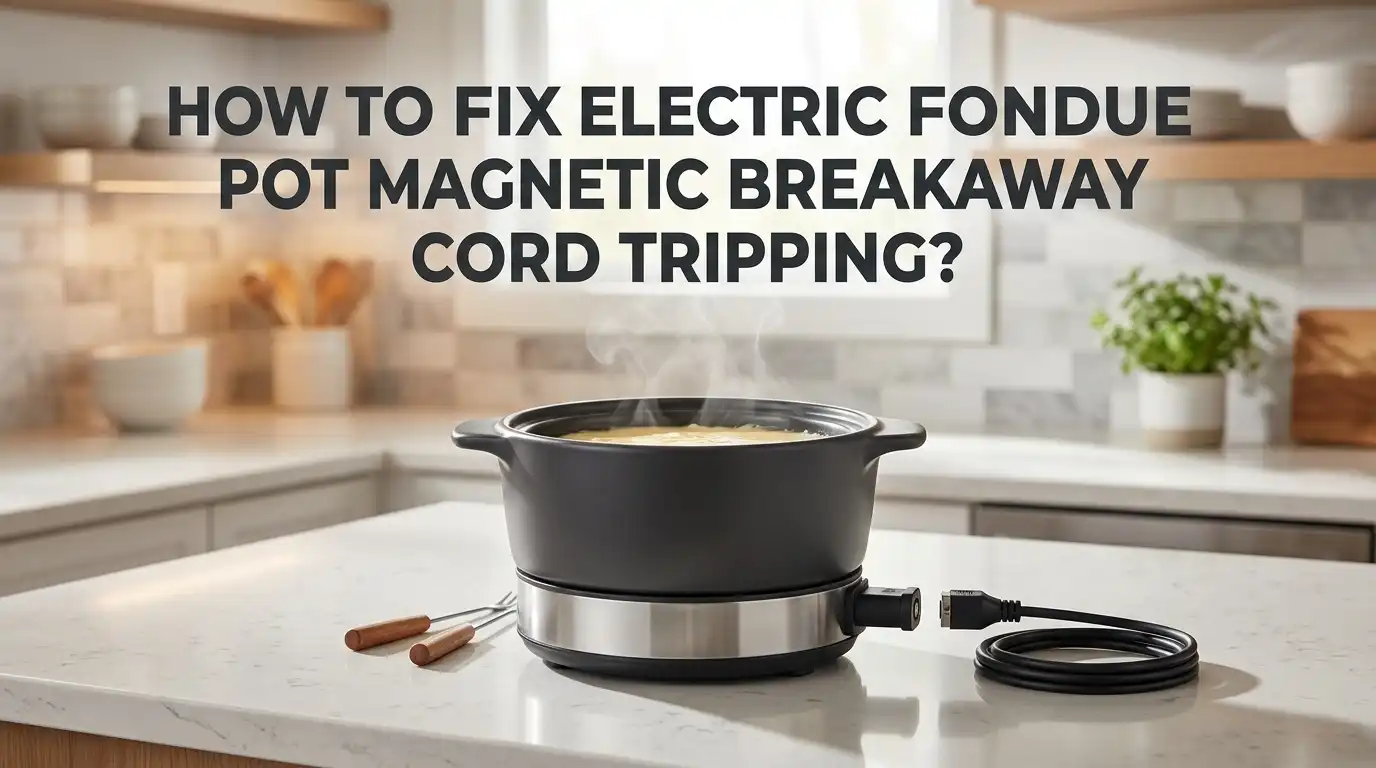
A magnetic breakaway cord is a safety device that connects your electric fondue pot to power. It uses two magnetic pieces that snap together and pull apart when force is applied.
The magnetic connection works like this. One magnetic piece attaches to the pot itself. The other piece connects to your power cord. When these two magnets meet, they lock together firmly.
The breakaway feature activates when something pulls the cord with enough force. If someone trips over the wire or the pot gets yanked, the magnets separate instantly. This stops hot fondue from spilling on you or your guests.
The connection sequence matters for keeping the magnets engaged. You start by connecting the magnetic cord directly to the pot. Next, you attach your extension cord to that magnetic piece. Finally, you plug everything into the wall outlet. This order ensures the magnets stay locked throughout cooking.
Tension on the cord is the main culprit behind unwanted tripping. When cords lie loose on the floor or hang off a table edge, any slight movement can trigger separation. Even normal foot traffic near the pot creates enough vibration to pop the connection apart.
Proper cord management prevents most tripping problems. Route your power cables through the center split of the pot stand. This keeps them secure and protected from accidental pulls. Coil excess cord neatly beside the pot rather than letting it dangle.
The magnetic breakaway exists for your safety, not as an inconvenience. Understanding how it works helps you use it correctly. When you follow the right connection order and manage your cords properly, your fondue pot stays powered and ready throughout your meal.
Why Your Fondue Pot Cord Keeps Tripping or Disconnecting
Your electric fondue pot cord disconnects because of how you handle it. The magnetic breakaway design is sensitive to pressure and pulling. Understanding why this happens helps you fix the problem.
Tension is the biggest reason your cord trips. When you pull, tug, or stretch the cable during use, the magnetic connection feels that force. The breakaway activates to protect you from spills and burns. Even small movements can trigger it if the cord sits under strain.
Loose cords create accidental disconnections too. If your power cable hangs freely or drapes across your table edge, any bump or movement can cause the magnets to separate. The cord needs support and stability to stay connected.
Reversing your connection order causes tripping as well. Many people plug the cord into the wall first, then attach it to the pot. This backward sequence leaves the magnetic connection weaker. The magnets do not engage fully when you connect in the wrong order.
Incorrect disconnection methods also damage the magnetic bond over time. If you yank the cord from the pot instead of unplugging from the wall outlet, you strain the magnets. Repeated pulling wears down their holding power.
Poor cord routing lets cables move around freely. When your power cable sits loose on the table or floor, it shifts with every movement. This constant motion weakens the magnetic connection.
The solution involves three things: proper connection order, secure cord placement, and correct disconnection methods. Route your cables through the center pot split. Keep tension off the cord at all times. Unplug from the wall outlet first, never from the pot.
The Correct Connection Sequence for Setup
Your electric fondue pot’s magnetic cord needs a specific setup order to work correctly. This sequence prevents the breakaway from tripping during your meal.
Start with the pot itself. Connect the magnetic cord directly to your fondue pot first. This is step one. Do not skip this or reverse it.
Add the extension cord next. Once the magnetic plug sits firmly in the pot’s connection port, attach your extension cord to the magnetic plug. Make sure it clicks or seats fully into place.
Plug into the wall last. After both connections are secure, plug the extension cord into your wall outlet. This three step order keeps the magnetic connection strong and engaged throughout cooking.
The reason this sequence matters is simple. Your magnetic breakaway activates when tension pulls on the cord. When you reverse the steps, the magnets never fully engage. They sit loosely, ready to disconnect from the smallest tug.
Route cords through the center split. Most fondue pots have a center opening in the pot stand. Thread both your power cord and extension cord through this opening. This keeps cables close to the pot and away from feet or furniture.
Keep cords tight and secured. Loose cables hanging around create accidents. Any movement or accidental bump can trigger the breakaway. Pull cords snug so they cannot swing or dangle.
This correct connection sequence takes only seconds. It eliminates most tripping issues before they start. Your fondue pot will stay connected and warm throughout your entire meal when you follow these steps in order every single time.
The Proper Disconnection Protocol to Avoid Damage
The proper disconnection protocol keeps your magnetic cord system working well over time. Many people damage their cords by using them as the primary disconnect method, which weakens the magnetic bond permanently.
Always unplug from the wall outlet first. This is the safest and most effective way to disconnect your fondue pot. Never pull the cord directly away from the pot to disconnect it. Pulling the cord puts stress on the magnetic connection and causes premature wear.
After you unplug from the wall, the magnetic plug may still be connected to your pot. This is normal and correct. Let the pot cool before you handle it further. Once it cools, you can gently separate the magnetic connector from the pot if needed.
If you need to reconnect everything later, follow the proper sequence again. Connect the magnetic cord to the pot first. Attach your extension cord second. Plug into the wall outlet last. This order ensures the magnets stay properly engaged throughout your meal.
Proper cord management prevents most tripping issues. Route your cables through the center split of the pot stand to keep them organized and secure. Squeeze the cords tightly so they cannot move around freely. Loose cables shift during use and create tension that triggers accidental disconnections.
The magnetic breakaway exists for your safety. When someone trips over the wire or pulls it too hard, the connection releases instead of tipping your hot fondue pot. Respect this feature by handling your cords carefully and following the correct disconnection steps every time you use your pot.
Step-by-Step Fix: Securing Cords Through the Pot Split
The key to fixing your electric fondue pot cord tripping is securing the cables properly through the pot’s center split. This simple step prevents accidental disconnections during cooking.
Start by locating the center opening in your fondue pot stand. Most pots have a small gap or split running down the middle of the base. This opening exists specifically for cord management.
Thread both your magnetic cord and extension cord through this center split. Push the cables down gently until they pass completely through the opening. This routing keeps the cords aligned with the pot’s body.
Once the cords pass through, squeeze them together tightly against the pot. Hold them firmly in place so no slack remains. Tension on the cords should come from the routing, not from pulling or stretching.
Check that the magnetic connector sits flush against the pot’s connection port. The plug should feel snug and secure. If it feels loose, disconnect and reconnect it firmly.
Keep the extension cord organized as it exits the center split. Lay it flat along your work surface or table. Avoid letting it hang or dangle freely.
Test your setup by gently tugging on the extension cord. The magnetic connector should stay attached to the pot. If it disconnects easily, the cords need tighter securing through the center split.
This method works because it eliminates movement and tension on the magnetic connection point. When cords are loose, any slight pull can trigger the breakaway mechanism accidentally. By routing and securing everything properly, your fondue pot stays connected throughout your meal.
Common Mistakes That Cause Repeated Tripping
Repeated tripping with your electric fondue pot usually comes from simple mistakes. Understanding these errors helps you fix the problem quickly.
The most common mistake is reversing your connection order. Many people plug the extension cord into the wall first, then attach the magnetic connector to the pot. This backwards approach puts stress on the magnetic breakaway system. The cord trips because it’s not designed to handle power in that sequence. Always connect the pot first, add the extension cord second, then plug into the wall last.
Another frequent error is using the power cord as your main disconnect method. People yank the cord to stop the fondue pot instead of unplugging from the wall outlet. This creates tension on the magnetic connection and causes it to separate during cooking. The magnetic breakaway activates when you least expect it. Always unplug from the wall outlet first to avoid this problem.
Leaving cords loose and unsecured creates constant movement. When cables hang freely around your pot, they shift during cooking. This shifting creates tension on the magnetic connector. The magnetic system thinks there’s danger and disconnects. Tension on cords is the main culprit behind repeated tripping.
Many people also fail to route their cords properly through the pot’s center split. The center opening exists specifically for cable management. When cords sit outside the split, they pull at awkward angles. This angle creates stress on the magnetic connection point.
The solution is simple: secure everything tightly. Thread both cords through the center split and squeeze them together firmly. Check that the magnetic connector sits flush against the port. Test by gently tugging the extension cord. Proper setup eliminates most tripping issues permanently.
Troubleshooting Persistent Breakaway Issues
When your magnetic breakaway cord keeps tripping during use, the problem usually stems from one specific issue: tension on the magnetic connector. This tension forces the breakaway mechanism to activate when it shouldn’t.
The first step is checking your connection sequence. You must connect the magnetic cord to the pot first, then attach your extension cord, and finally plug into the wall outlet. Reversing this order creates stress on the magnetic joint from the start.
Next, examine how your cords sit when the fondue pot is in use. Many people let cords hang freely or drape across the table. This movement puts constant pressure on the magnetic connection point, triggering unintended disconnections. The solution is straightforward: keep tension off that connection.
Secure both cords tightly through the center split of your pot stand. This positioning prevents any pulling or tugging that could activate the breakaway. Once the cords pass through the center opening, squeeze them firmly against the pot. The magnetic connector should sit flush against the connection port without any wiggling room.
Test your setup by gently pulling on the extension cord. If it disconnects easily, your cords aren’t secured tightly enough. Adjust them until the magnetic plug stays connected even with moderate tension.
Another common cause of persistent tripping is using the power cord as your main disconnect method. Never pull the cord to disconnect. Always unplug from the wall outlet first instead.
Finally, check that your extension cord stays organized as it exits the pot. Coiled or tangled cords create drag that pulls on the magnetic connection. Keep everything neat and straight to maintain proper alignment throughout your fondue session.
Tips for Long-Term Cord Management and Prevention
Long term cord management keeps your electric fondue pot working reliably. The foundation of prevention is understanding the correct connection order. Connect the magnetic cord to the pot first, then attach your extension cord, and finally plug into the wall outlet. This sequence matters because it establishes proper electrical flow and reduces stress on the magnetic connection.
Store your cords carefully when your fondue pot sits unused. Coil the magnetic cord loosely without kinks or sharp bends. Never wrap cords tightly around the pot body, as this creates tension points. Keep the extension cord separate from the magnetic cord to prevent tangling during storage.
During regular use, inspect your magnetic connector monthly. Look for dirt, dust, or debris on the connection surfaces. Wipe both the magnetic plug and the pot’s connection port with a dry cloth. Clean connections prevent accidental disconnections caused by poor contact.
Route your cords through the center pot split every single time you set up your fondue pot. This routing method is the most important prevention step you can take. Squeeze the cords tightly as they pass through the split. This eliminates movement and tension that trigger the magnetic breakaway unintentionally.
When you finish using your fondue pot, always unplug from the wall outlet first. Never use the magnetic cord itself to disconnect the pot from power. This protects the magnetic connector from wear and damage.
Check your cords for visible damage before each use. Look for cracks, exposed wires, or worn spots on the cord jacket. Replace damaged cords immediately to prevent safety hazards and connection problems.
Final Thoughts
Fixing a magnetic breakaway cord problem does not need to be complicated. Small changes in how you connect and manage your cords make a big difference.
Remember the correct order every time. Connect the magnetic cord to your pot first. Attach your extension cord second. Plug into the wall outlet last.
This sequence protects the magnetic connection from unnecessary stress. It also keeps your fondue pot stable during setup.
When you finish cooking, reverse the process properly. Unplug from the wall outlet first. Never pull the power cord to disconnect your pot.
Tension is the real enemy here. Cords that sit loose or get pulled create pressure on the magnetic point. This pressure triggers unwanted breakaways.
Routing your cords through the center split solves most tripping problems. This simple step keeps everything organized and tight.
Squeeze both cords together as they exit the split. This prevents any wobbling or unwanted movement during use.
Most people face this issue because they skip small steps. Reversing the connection order causes many problems. Using the power cord as a disconnect method causes even more.
Consistency matters more than complexity. Once you build the right habits, tripping issues disappear naturally.
Check your cords regularly for wear or damage. A damaged cord will not sit properly, even with correct routing.
Your electric fondue pot works best when cords stay secure and connections stay proper. Following these steps keeps your meals uninterrupted.
Fondue nights should feel relaxed and enjoyable. With the right cord habits, you will spend more time enjoying your food and less time troubleshooting your equipment.
Frequently Asked Questions
Why does my magnetic breakaway cord disconnect when I’m using the fondue pot?
Tension on the cords causes unintended disconnection. When cords pull or twist during use, they trigger the magnetic breakaway. This happens most often when cords aren’t routed through the center pot split properly.
The magnetic connector activates when it senses unusual pressure. Think of it as a safety feature that responds to stress. Your job is to eliminate that stress by managing cord placement.
What’s the correct order for connecting my fondue pot?
Follow this sequence every single time. First, connect the magnetic cord to the pot. Second, attach your extension cord to the magnetic plug. Third, plug into the wall outlet.
This order protects the magnetic connection from unnecessary strain. Reversing the steps puts stress on the connector right away. The sequence matters because each step builds on the previous one safely.
Should I use the power cord to disconnect my fondue pot?
No. Always unplug from the wall outlet first instead. Using the cord as your main disconnect method puts pressure on the magnetic connector. This repeated stress causes tripping problems over time.
After unplugging the wall outlet, you can safely disconnect the extension cord if needed. Then handle the magnetic plug. This approach keeps your connector in good condition for years.
How do I prevent the cord from tripping during cooking?
Route both cords through the center split of your pot stand. Squeeze them together tightly as they exit. This secures them and prevents accidental movement during use.
Loose cords shift around as you stir or adjust the pot. That movement triggers the breakaway. Tight routing eliminates the problem completely.
Hi, I’m Frankie Shaw, the founder and writer behind Swittchly 👋. I’m a passionate tech enthusiast who loves exploring the latest gadgets, devices, and electronics that hit the market. Through my honest, research-backed Amazon product reviews, I help readers make smarter buying decisions without the hype or confusion.