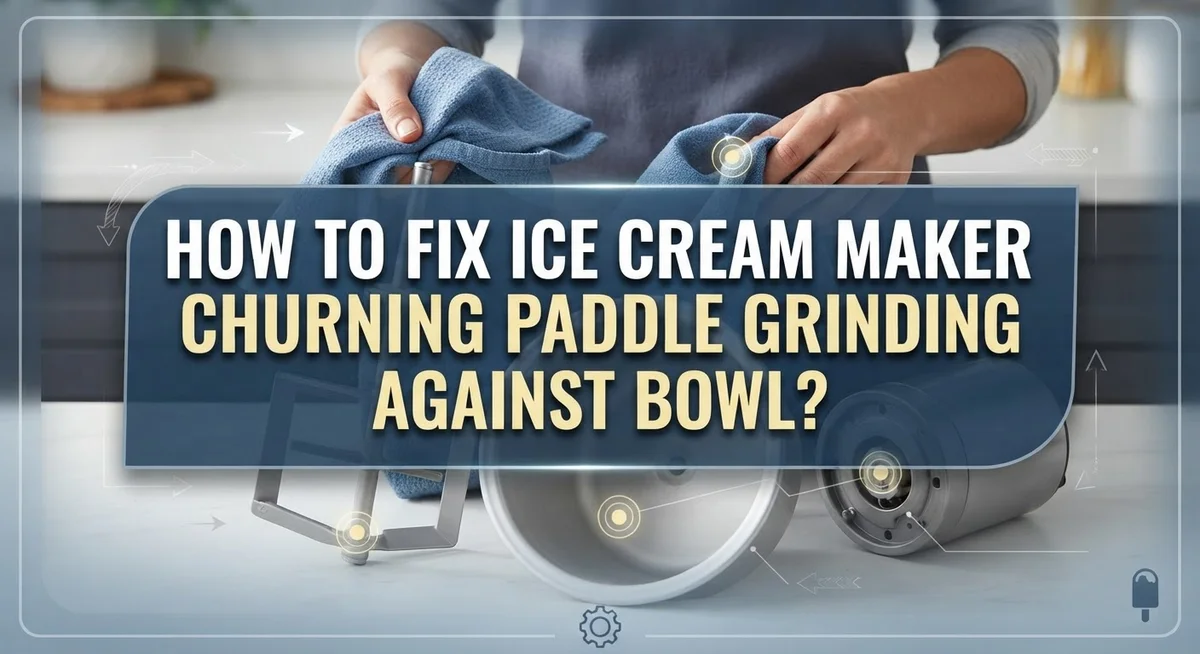
How To Fix Ice Cream Maker Churning Paddle Grinding Against Bowl?
That grinding noise from your ice cream maker can ruin dessert night fast. You pour in your favorite mix, turn on the machine, and instead of smooth churning, you hear metal scraping against the bowl.
This problem happens more often than you think. The good news? It’s usually simple to fix.
Most grinding issues come down to a few common culprits. Your bowl might not be frozen enough. The paddle could be sitting wrong inside the bowl. Sometimes the motor connection is loose or the coupling between the shaft and paddle has worn out.
In a Nutshell
- Freeze the bowl fully. Give it at least 24 hours in the freezer. A half frozen bowl is the top reason paddles grind and struggle to spin.
- Check the paddle placement. Make sure it sits correctly inside the bowl before you start churning. A crooked paddle will scrape the sides.
- Secure the motor head. Attach the driver firmly to the base. A loose connection makes the paddle wobble instead of turning smoothly.
- Inspect the coupling. The link between the motor shaft and the paddle must be tight. A worn or loose coupling causes flopping and grinding noises.
- Chill your mixture first. Pour a cold base into the machine. This helps the paddle move easily without fighting against warm liquid.
- Watch how the paddle moves. It should rotate in a steady, smooth motion. If it flops sideways, stop and recheck every attachment point.
Understanding Why the Paddle Grinds Against the Bowl
Your ice cream maker’s paddle grinds against the bowl for specific mechanical reasons. Understanding these causes helps you fix the problem quickly.
The most common reason is an insufficiently frozen bowl. When the bowl isn’t cold enough, the mixture freezes too slowly. This causes the paddle to slip and rub against the bowl surface instead of rotating smoothly. The bowl needs to be frozen solid, not just chilled.
Another major cause is improper paddle insertion. If the paddle doesn’t sit correctly in the bowl’s center, it tilts at an angle. This angled position makes the paddle scrape the bowl walls as it rotates. The paddle must align perfectly with the bowl’s axis.
Loose connections between components also create grinding. The motor shaft and paddle coupling can become loose over time. When this connection isn’t tight, the paddle wobbles during operation. This wobbling causes the paddle to contact the bowl.
Insecure motor head attachment is another culprit. If you don’t attach the driver firmly to the base, the entire motor assembly can shift. This movement transfers down to the paddle, causing it to grind. The motor head must be locked in place securely.
The paddle itself might have damage. Bent or warped paddles don’t rotate in a true circle. They hit the bowl at different points during each rotation. Check your paddle for any visible bending or deformation.
The bowl attachment point matters too. If the bowl doesn’t click or lock properly onto the base, it can shift during churning. A loose bowl moves around, bringing the sides closer to the rotating paddle.
Finally, the motor might be failing. A weak motor can’t rotate the paddle at proper speed. Slow rotation combined with ice formation creates grinding sounds. Understanding these mechanical issues helps you identify which component needs attention. Once you know the cause, fixing the problem becomes straightforward.
Freezing the Bowl Properly Before Use
Your ice cream maker’s bowl is the foundation of smooth churning. A properly frozen bowl prevents the paddle from grinding and ensures your ice cream sets correctly.
Start by placing your bowl in the freezer at least 24 hours before you plan to make ice cream. This full freezing time allows the liquid inside the bowl’s walls to become completely solid. A partially frozen bowl will not keep your mixture cold enough, causing the paddle to slip and grind against the sides.
Check your freezer temperature before you begin. Your freezer should stay at 0°F or below. If your freezer runs warmer than this, the bowl won’t freeze properly even with extra time. You can use a freezer thermometer to verify the temperature.
Remove the bowl from the freezer only when you are ready to use it. The moment you take it out, it starts to warm up. Work quickly to attach it to the base and add your chilled mixture. Every minute counts.
When you attach the bowl to the base, make sure it clicks or locks into place securely. A loose bowl will shift during churning, causing uneven contact with the paddle. Spin the bowl gently by hand to confirm it sits flush against the base.
Pour your ice cream mixture into the bowl immediately after attachment. Use a mixture that has been chilled in your refrigerator for at least two hours. A room temperature mixture will warm the frozen bowl faster, reducing its effectiveness.
Keep your freezer door closed while the machine churns. Opening it repeatedly lets warm air inside and causes the bowl temperature to rise. This temperature change directly causes the grinding problem you are trying to fix.
These steps create the ideal conditions for your paddle to rotate smoothly and your ice cream to churn perfectly.
Step-by-Step Guide to Assembling the Paddle and Bowl Correctly
When you assemble your ice cream maker, the order of steps matters greatly. Each component must fit together properly to prevent grinding sounds.
Start by removing your frozen bowl from the freezer. Check that the bowl is completely solid and frosty all over. A partially frozen bowl will shift during churning and cause the paddle to grind. Place the bowl onto the base unit. You should hear or feel a click as it locks into position. This secure attachment keeps the bowl stable throughout the entire process.
Next, insert the paddle into the bowl’s center opening. The paddle should slide in smoothly without resistance. Make sure the paddle sits straight and doesn’t tilt to one side. A tilted paddle will rub against the bowl’s walls. Push the paddle down until it reaches the bottom of the bowl. It should rest flat on the bowl’s base.
Now attach the motor head or driver unit to the top of the base. This component connects to your paddle and makes it rotate. Align the motor head carefully with the base attachment points. Tighten all connection points firmly, but do not force them. A loose motor head allows the paddle to wobble, which causes grinding.
Check the coupling between the motor shaft and the paddle. This small connector transfers power from the motor to the paddle. Verify it is tight and not cracked or broken. A damaged coupling prevents smooth rotation.
Before pouring your ice cream mixture into the bowl, chill it first. A cold mixture reduces stress on the motor and paddle. Pour the chilled mixture slowly into the frozen bowl. The combination of a properly frozen bowl, secure connections, and correct paddle placement eliminates grinding problems. Your paddle will rotate smoothly and churn your ice cream evenly.
Checking and Securing the Motor-to-Paddle Coupling
The motor to paddle coupling is where your motor shaft connects to the paddle itself. This connection must be tight and secure for the paddle to spin smoothly without grinding against the bowl.
Start by locating the coupling on your ice cream maker. It sits where the motor shaft meets the paddle. Gently try to wiggle the paddle while the motor is off. The paddle should not move side to side or up and down. Any looseness here causes grinding.
Check if your coupling has a set screw or locking mechanism. Many machines use a small screw that holds the paddle firmly in place. Use the appropriate tool to tighten this screw. Turn it clockwise until snug, but do not force it too hard. Over tightening can damage the coupling.
Inspect the coupling for visible cracks or damage. A broken coupling cannot hold the paddle steady no matter how tight you make it. If you see damage, the coupling needs replacement.
After tightening, spin the paddle by hand to feel for resistance. It should rotate freely without catching or grinding sounds. The motion should feel smooth and consistent throughout the full rotation.
Reattach your motor head or driver unit firmly to the base. A loose motor connection transfers vibrations down to the coupling, making it seem loose even if it is tight. Push the motor head down until you hear it click or lock into position.
Test the coupling again after securing the motor head. Sometimes the motor’s weight helps pull everything into proper alignment. Spin the paddle once more to confirm it moves smoothly.
Once everything feels secure, you are ready to test with your ice cream mixture. The coupling should now keep your paddle rotating in one smooth motion without any grinding against the bowl walls.
Tips for Smooth Churning and Even Mixing
Getting smooth churning means paying attention to several key factors before and during the process. Start with your ice cream base. Chill it in the refrigerator for at least two hours before pouring it into your frozen bowl. A cold mixture freezes faster and churns more evenly, which prevents the paddle from grinding against the bowl walls.
Use the right scraping technique. During churning, use a plastic or wooden scraper to gently fold the mixture from the sides toward the center. This keeps ice crystals from building up unevenly. Never use metal utensils, as they can damage both your paddle and bowl. Scrape only when the motor is off to stay safe.
The paddle should rotate smoothly in one consistent direction. If you notice it wobbling or flopping side to side, stop immediately and check your attachments. A loose paddle creates friction against the bowl, which causes that grinding sound.
Timing matters for the final stages. When your ice cream reaches the soft serve stage, let it churn for one or two more minutes. Then turn off the machine and let it sit for a few minutes before removing the paddle. This resting period helps the mixture set slightly, making removal easier without forcing the paddle against the bowl.
Monitor the sound and feel of your machine throughout the process. A healthy ice cream maker produces a steady, quiet hum. Grinding noises mean something needs adjustment. Stop, unplug the machine, and inspect your connections before continuing.
Keep your freezer at zero degrees Fahrenheit or colder. A warmer freezer means a softer bowl, which fails to freeze your mixture properly. This directly causes paddle grinding issues. Proper temperature control prevents most churning problems before they start.
Common Mistakes That Cause Grinding or Flopping Paddles
Many people make simple mistakes that cause their paddle to grind or flop around. Understanding these errors helps you fix the problem quickly.
Freezing time is the most common mistake. Your bowl needs at least 24 hours in the freezer before use. A partially frozen bowl causes the paddle to scrape and grind against the sides. The mixture won’t freeze properly, so the paddle loses traction and starts flopping instead of rotating smoothly.
Loose attachments create major problems. If your paddle isn’t inserted all the way into the bowl’s center opening, it will wobble. The motor head must attach firmly to the base. Even a slightly loose connection allows the paddle to move sideways instead of spinning downward.
Coupling issues are often overlooked. The connection between your motor shaft and paddle can loosen over time. A loose coupling means the paddle won’t receive power from the motor. Check this connection before every use to ensure it’s tight.
Improper paddle positioning matters more than people think. The paddle should sit centered in the bowl. If it tilts or sits off center, it will hit the bowl walls during rotation. This grinding sound means your paddle isn’t aligned correctly.
Cold mixture temperature gets forgotten. Pouring warm or room temperature mixture into your frozen bowl causes problems. The sudden temperature change can affect how the paddle sits in the bowl. Always chill your ice cream base in the refrigerator for at least two hours before pouring it in.
Motor head security is essential. If your driver unit isn’t attached firmly, the paddle loses power transmission. Tighten all connections by hand before running your machine. A secure assembly prevents grinding, flopping, and uneven churning throughout the entire process.
Troubleshooting Persistent Paddle Problems
Persistent paddle problems require a systematic approach to identify what’s actually happening inside your machine. The grinding sound you hear usually means one of three things: your bowl isn’t frozen solid enough, your paddle isn’t sitting properly in the bowl, or your motor connection has become loose.
Start with the bowl temperature first. Even if you froze your bowl for 24 hours, it can partially thaw during storage. Remove your bowl from the freezer and place it back in the freezer for at least 12 additional hours before your next attempt. A bowl that’s not rock solid will allow the paddle to shift around and create that grinding noise.
Next, check how the paddle enters the bowl. The paddle shaft should slide straight down into the center opening without any resistance. If it feels tight or crooked, remove it and inspect the opening for ice buildup or debris. Gently clean the center post and shaft with a soft cloth. Reinsert the paddle slowly and make sure it sits flush against the bottom.
Examine the driver or motor head connection. This is the part that attaches to the top of your base and powers the paddle. Loosen the attachment mechanism slightly, then tighten it firmly in a clockwise direction. Many people don’t tighten this enough, which causes the motor to slip and the paddle to rotate unevenly.
Test your paddle by turning it by hand before running the motor. It should rotate smoothly without catching or wobbling. If you feel grinding resistance when turning it manually, your bowl needs more freezing time.
Run a quick test cycle without ice cream mixture. Pour just water into the bowl and run the machine for 30 seconds. Listen for grinding sounds and feel for vibrations. Smooth operation without noise means you’ve fixed the problem.
Final Thoughts
Fixing a grinding paddle does not need to feel like a big task. Most problems come down to three things. Freezing time, attachment, and coupling strength.
Once you check these areas, your machine should run smoothly again. Give your bowl enough time in the freezer. Twenty four hours is the minimum, but a full day and night works even better.
Always double check how the paddle sits in the bowl. It should slide in straight and rest at the center point. A crooked paddle will grind every single time.
The motor connection deserves attention too. Loose couplings are a silent cause of most grinding sounds. Tighten this part before each use, even if you checked it last time.
Think of these steps as a routine, not a one time fix. Ice cream makers work best when treated with a bit of care before each batch. Skipping steps often leads to the same grinding problem returning.
Testing your machine before adding mixture saves time. Run it empty or with just water for a few seconds. This quick check tells you if the paddle rotates correctly.
If grinding continues after trying these fixes, the coupling piece may have worn out. This part connects the motor to the paddle and can weaken with repeated use.
Replacing a worn coupling often solves problems that other fixes cannot. It is a small part, but it plays a big role in how your machine runs.
Most ice cream maker issues are simple to solve once you know where to look. Patience and regular checks make a real difference over time.
Your machine can serve you well for years with proper care. A few extra minutes of prep now can save you frustration and grinding noise later.
Frequently Asked Questions
Why is my paddle grinding against the bowl?
The paddle grinds when it’s not rotating smoothly. This happens for three main reasons: your bowl isn’t frozen solid enough, the paddle isn’t inserted correctly, or the motor connection is loose. Start by checking your bowl temperature first. Even a 24 hour freeze can partially thaw if stored improperly. Make sure your bowl stays in the freezer until you’re ready to use it.
How do I know if my bowl is frozen enough?
Your bowl needs at least 24 hours in the freezer before use. The entire interior must feel hard and icy to the touch. If you stored it in a warm spot or left it out for even a few minutes, it may have thawed slightly.
Test the bowl by touching the inside surface. It should feel completely cold and solid, not slushy or soft. If it feels warm anywhere, freeze it again for several more hours.
What should I check about the paddle attachment?
The paddle shaft must slide straight down into the bowl’s center opening. Make sure it’s inserted all the way. A paddle that sits too high or at an angle will flop around instead of rotating smoothly.
Next, verify that your driver or motor head is attached firmly to the base. The connection between your motor shaft and the paddle should be tight and secure. Loosen connections cause the paddle to slip and grind.
Can I test my machine before adding ice cream?
Yes, this saves time and prevents waste. Run a quick test cycle with just water. Pour water into your frozen bowl and run the machine for 30 seconds without any ice cream mixture. Watch how the paddle moves. It should rotate smoothly without grinding sounds or resistance.

Hi, I’m Frankie Shaw, the founder and writer behind Swittchly 👋. I’m a passionate tech enthusiast who loves exploring the latest gadgets, devices, and electronics that hit the market. Through my honest, research-backed Amazon product reviews, I help readers make smarter buying decisions without the hype or confusion.