Why Is My Smartwatch ECG Sensor Showing Inconclusive Results After Sweating?
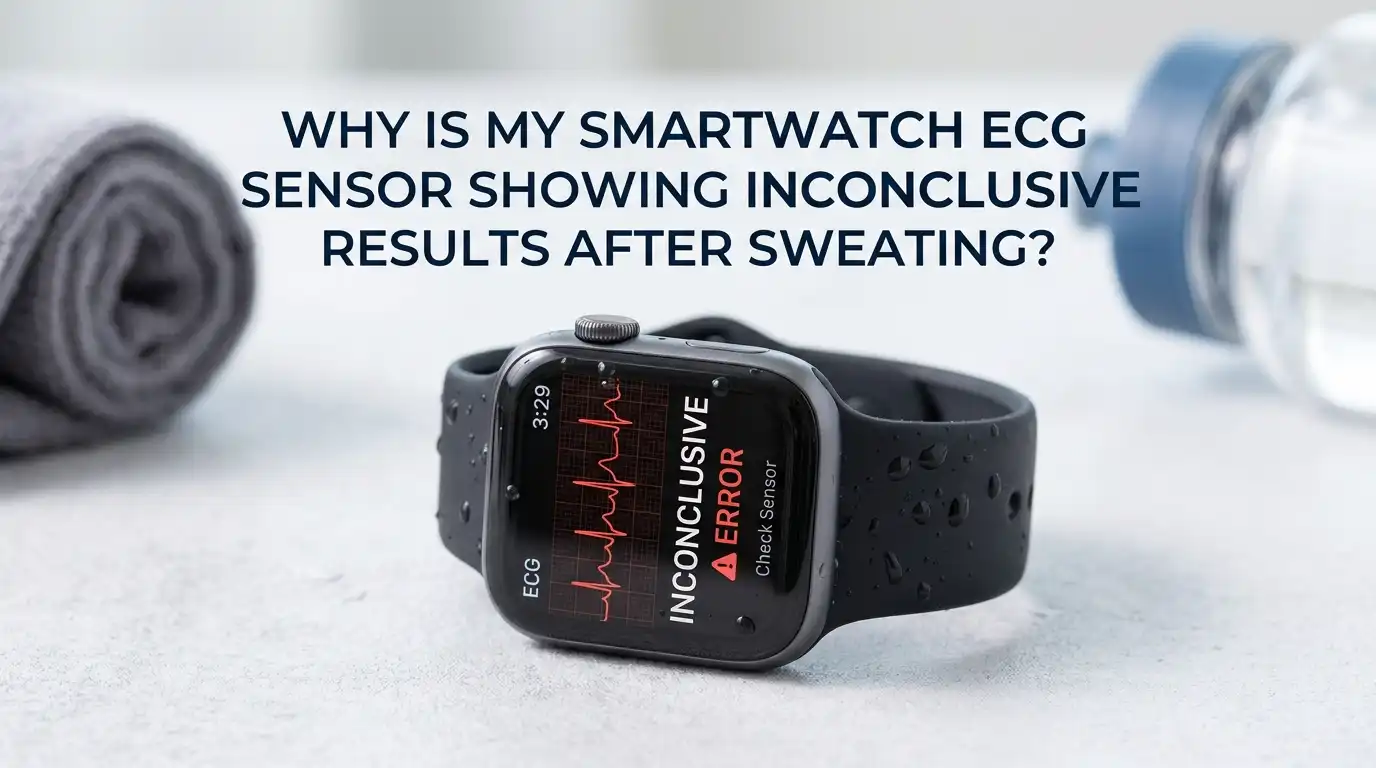
Sweat and smartwatch sensors share a complicated relationship. You finish a workout, feel curious about your heart rhythm, open the ECG app, and the screen flashes one frustrating word: Inconclusive.
You try again. Same result. The watch worked fine yesterday, so what changed? The answer almost always sits on your skin.
This guide walks you through every cause and every solution in plain language, so you can get a clean reading the next time you check.
Key Takeaways
- Sweat is salty and conductive, which sounds helpful but actually creates electrical noise that confuses the ECG sensor and triggers inconclusive results.
- A loose, wet band is the top cause of failed readings after exercise because the watch slides and breaks skin contact with the back crystal sensor.
- Drying both the watch and your wrist with a soft microfiber cloth fixes most cases in under 60 seconds without any other steps needed.
- Sit still, rest your forearms on a flat surface, and breathe calmly for at least one full minute before starting a new ECG attempt.
- Clean the sensor crystal and the digital crown weekly using a slightly damp lint free cloth to remove dried sweat, sunscreen, and skin oils.
- Inconclusive does not mean unhealthy, it just means the watch could not read a clear signal, so repeat the test in better conditions before worrying.
What an Inconclusive ECG Result Actually Means
An inconclusive result is the watch saying I cannot tell what I just recorded. It is not a diagnosis. It is not a warning. It simply means the signal had too much noise, the heart rate fell outside the readable range, or the rhythm did not match any pattern the algorithm recognises.
Most smartwatch ECG apps can only confirm three things clearly: sinus rhythm, atrial fibrillation, or low or high heart rate. Anything else lands in the inconclusive bucket.
Sweat usually pushes results into that bucket through electrical interference rather than a real heart issue. Knowing this difference removes a lot of unnecessary worry and helps you focus on the real fix, which is improving the recording conditions.
How Sweat Interferes With the ECG Sensor
Your ECG works by reading tiny electrical signals between two points, the back of the watch and your fingertip on the crown or side button. Sweat sits between your skin and the sensor and adds its own electrical chatter to that signal.
Sweat contains sodium, potassium, and chloride. These minerals conduct electricity well, but they conduct too much in unpredictable ways. The watch then picks up random spikes that look nothing like a heartbeat.
Movement makes this worse because sweat acts like a lubricant, letting the watch glide around your wrist. Every tiny shift creates a new electrical bump in the reading, and the algorithm gives up trying to find a steady waveform.
Step One: Dry Everything Before You Retry
This is the single most effective fix. Take the watch off, pat your wrist dry with a clean towel, and wipe the back of the watch with a soft microfiber cloth. Do the same to the digital crown or the side button you press during the test.
Do not blow on the sensor with your mouth, since breath adds humidity back. Avoid paper towels, which can leave fibres on the crystal. Wait about two minutes before putting the watch back on so your skin returns to a neutral state.
A dry wrist with a dry sensor gives the cleanest baseline. Pros include speed and zero cost. Cons are minor, mainly that you might need to wait a few minutes if you are still actively sweating.
Step Two: Tighten the Band to the Right Snugness
A loose band after sweating is almost as bad as a wet wrist. When sweat lubricates your skin, the band that felt perfect at breakfast now slides freely. The sensor loses contact, and the watch records gaps instead of beats.
Tighten the band one notch past your usual setting, but never so tight that it pinches or leaves deep marks. You should be able to slide one finger under the band with mild resistance. For sport bands, fluoroelastomer or silicone types grip best when slightly damp.
Leather and woven nylon bands hold sweat and should be swapped for a sport band during workouts. Pros of a snug band include reliable contact and better heart rate accuracy. Cons include skin irritation if worn too tight for hours.
Step Three: Wash Your Hands and Wrist With Plain Water
Sweat leaves a salty residue even after the moisture evaporates. That dried crust still conducts electricity in a messy way. A quick rinse with plain lukewarm water removes the salt without adding soap residue, which can also interfere with readings.
Pat your wrist dry afterward with a soft towel. Skip lotions, oils, and scented moisturisers until after your ECG, since these create a slick layer between your skin and the sensor.
Clean skin with a small amount of natural moisture often gives the best signal, which is why some cardiologists suggest lightly moistening the wrist if it feels too dry.
Pros of washing include a fresh start and better hygiene. Cons are basically none, unless you have a skin condition that reacts to frequent water exposure.
Step Four: Wait Until Your Heart Rate Settles
Your watch needs a stable rhythm to classify the recording. Right after exercise, your heart is pumping fast, your breathing is heavy, and your chest muscles are still active. All of that creates motion artefact on the ECG line.
Sit down, place both feet flat on the floor, and rest your forearms on a table. Wait until your heart rate drops below about 100 beats per minute for most adults. Most ECG apps cannot classify rhythms above 120 or below 50 beats per minute and will mark anything outside that range inconclusive automatically.
Five to ten minutes of calm recovery usually does the trick. Pros include a true resting reading. Cons include the patience required, especially if you are eager to check immediately after a hard session.
Step Five: Position Your Arm and Finger Correctly
Posture matters more than people realise. If you hold the watch arm in the air, your muscles tense and add electrical noise. If your finger barely touches the crown, the circuit stays incomplete.
Rest both arms on a stable surface like a table or your thighs. Place your finger firmly but gently on the crown or side button, covering it fully without pressing hard. Keep the finger still for the entire 30 second recording.
Talking, laughing, or even deep breathing through the mouth can shake the signal. Pros of correct positioning include consistent results across sessions. Cons include needing a flat surface, which makes outdoor or post run ECGs harder to do well.
Step Six: Clean the Sensor Crystal Properly
Dried sweat, sunscreen, and dead skin cells build a thin film on the back of the watch over time. You might not see it, but the sensor does. This film acts like a foggy window, blocking the clean electrical contact the ECG needs.
Use a slightly damp lint free cloth to wipe the sensor crystal and the crown weekly. For heavier buildup, a soft toothbrush with plain water works well. Avoid alcohol wipes, harsh cleaners, ammonia, hydrogen peroxide, or anything abrasive, since these can damage the coatings on the sensor.
Pros of regular cleaning include long term sensor accuracy. Cons include the small risk of moisture entering the watch if you use too much liquid, so always wring the cloth out fully first.
Step Seven: Check Your Watch Position on the Wrist
The watch needs to sit on the top of your wrist, about one finger width above the wrist bone. Sweat often causes the watch to slide down toward the bone, which is exactly where the sensor loses skin contact because of the curve.
Slide the watch back up before each ECG and recheck the band tension. Left or right wrist does not matter for accuracy, as long as the orientation setting in the app matches what you actually wear.
Wearing the watch on the inside of the wrist sometimes improves contact for people with hairy arms or bony wrists. Pros of correct placement include better signal across heart rate, blood oxygen, and ECG features. Cons include having to adjust more often during sweaty activities.
Step Eight: Restart the Watch After a Sweaty Session
Sometimes the sensor logic gets confused after detecting water or sudden temperature shifts. Features like wrist detection and ECG can glitch until the watch resets its sensors. A simple restart clears the cache and rechecks all hardware.
Hold the side button until the power off slider appears, swipe to power down, then turn it back on. For deeper resets, hold both the crown and the side button until the logo appears.
This is especially useful if your ECG was working fine before a workout but suddenly fails afterward. Pros include solving software glitches quickly. Cons are limited, just the 30 to 60 seconds the watch takes to restart and reconnect with your phone.
Step Nine: Update Your Watch Software
Manufacturers regularly improve the ECG algorithm. Older firmware versions tend to flag more recordings as inconclusive than newer ones because the noise filters have improved over time.
Open your watch companion app on your phone, go to the software update section, and install any pending update. Keep the watch on its charger during the update and stay within Bluetooth range.
Some updates specifically mention ECG accuracy or motion handling in the release notes, so it is worth reading them. Pros include better algorithms and bug fixes for free. Cons include occasional new bugs and the time spent updating, which can take 30 minutes or more for major releases.
Step Ten: Know When to See a Doctor Instead
If you have followed every step above and still get repeated inconclusive results during calm, dry conditions, the issue might not be sweat anymore.
Persistent inconclusive readings can sometimes point to premature atrial contractions, low signal strength from naturally thin skin, or an actual irregular rhythm the algorithm cannot classify.
Save the PDF reports your watch generates and share them with your doctor or cardiologist. A real ECG machine in a clinic has ten or twelve leads compared to your watch single lead, so it can detect things the watch never will.
Pros of professional review include peace of mind and accurate diagnosis. Cons include cost and appointment wait times, but for ongoing concerns these are worth it.
Frequently Asked Questions
Can sweat permanently damage my smartwatch ECG sensor?
No, modern smartwatches with ECG features are designed to handle sweat and water at swim pool depths. The sensor itself is sealed under a sapphire or ceramic crystal. Dried sweat only affects accuracy temporarily and wipes away with a soft cloth.
How long should I wait after a workout to take an accurate ECG reading?
Wait at least five to ten minutes for your heart rate to return to resting levels, ideally below 100 beats per minute. Drying your wrist and the watch first speeds up the process and gives you the cleanest signal possible on the first try.
Does the type of watch band affect ECG accuracy after sweating?
Yes, significantly. Silicone and fluoroelastomer sport bands grip well and dry quickly. Leather, fabric, and woven nylon bands absorb sweat, stretch out, and let the watch slide. Switching to a sport band for workouts solves many sweat related ECG issues immediately.
Why does my ECG work fine on cool days but fail in hot weather?
Heat increases sweating, which loosens the band and adds electrical noise. Humidity also slows evaporation, keeping your skin moist longer. The fix is the same, dry your wrist, tighten the band, and let your heart rate settle before recording.
Is an inconclusive ECG result something to worry about?
Usually no. Inconclusive simply means the watch could not interpret the signal clearly. It is not a diagnosis of any heart condition. However, if you get repeated inconclusive results in calm, dry, resting conditions, talk to your doctor for a proper clinical ECG.
Should I clean the back of my watch with alcohol?
No. Alcohol, hydrogen peroxide, and abrasive cleaners can damage the sensor coatings and the seals around the crystal. Use only a soft, slightly damp, lint free cloth with plain water for cleaning, and dry it fully before wearing again.

Hi, I’m Frankie Shaw, the founder and writer behind Swittchly 👋. I’m a passionate tech enthusiast who loves exploring the latest gadgets, devices, and electronics that hit the market. Through my honest, research-backed Amazon product reviews, I help readers make smarter buying decisions without the hype or confusion.