
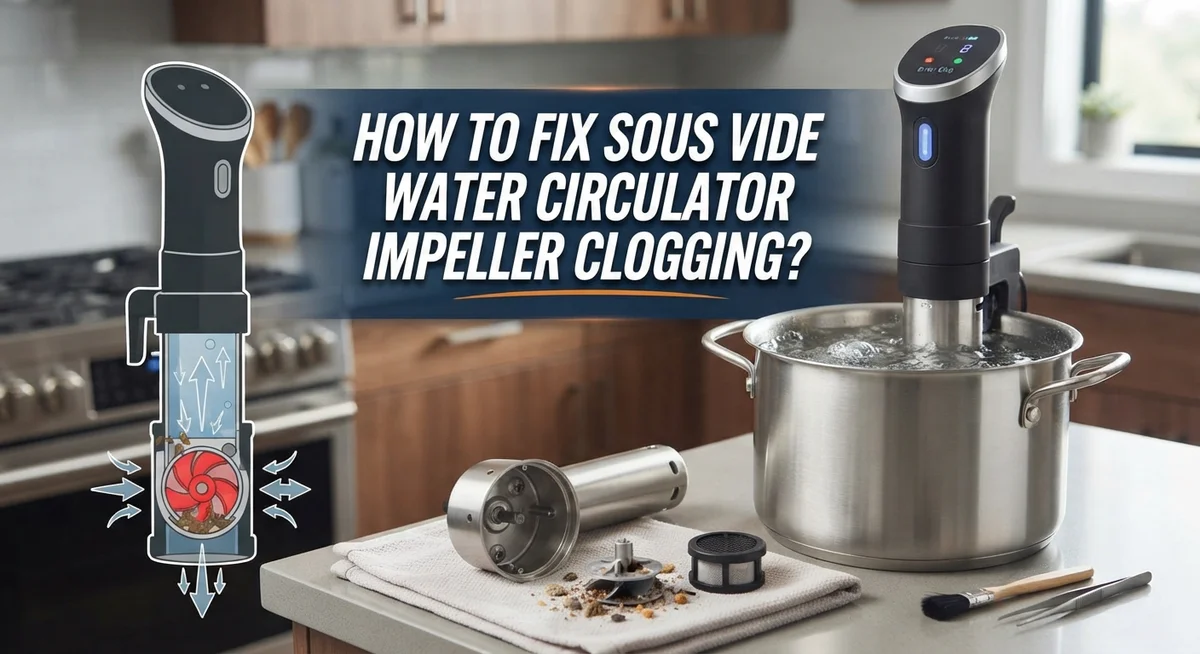
How To Fix Sous Vide Water Circulator Impeller Clogging?
Your sous vide circulator suddenly sounds weird. Or maybe the water barely moves at all.
This usually means one thing: a clogged impeller.
Mineral buildup and food debris love to collect around this small but mighty part. Over time, they block smooth water flow. Your device works harder but performs worse.
The good news? You can fix this problem at home. No need for expensive repairs or new equipment. Most clogs respond well to simple, natural cleaning methods.
In a Nutshell
- Unscrew the rubber foot at the base of your circulator by turning it counterclockwise. This gives you access to the impeller area.
- Mix a vinegar solution. Combine one part white vinegar with three parts water. This ratio works well for most clogs.
- Submerge the circulator head fully. Partial submersion won’t clean the entire impeller. Make sure the whole unit sits in the solution.
- Run the circulator at 140 to 150°F. Let it operate in the vinegar bath for a good soak time. This loosens mineral deposits naturally.
- Scrub gently with a toothbrush or fork tine. Avoid aggressive scrubbing since it can damage the delicate impeller blades. Soft, careful movements work best.
- Rinse everything thoroughly after soaking. This removes any leftover vinegar smell or residue.
- For tougher buildup, try a 10% CLR solution mixed with water instead. It handles stubborn mineral deposits well.
- If your unit still won’t circulate, try a power reset first. Unplug it, wait a moment, then plug it back in.
Understanding Impeller Clogging: Causes and Symptoms
Your sous vide circulator stops working smoothly when the impeller gets blocked. This small spinning part pushes water through your cooking vessel. When it clogs, you notice strange sounds or weak water flow.
Mineral buildup causes most impeller clogs. Hard water leaves white deposits inside your machine. Calcium and magnesium accumulate over time. Food particles also sneak into the impeller area during cooking. These materials stick together and block water movement.
You’ll recognize a clogged impeller by several signs. The circulator makes grinding or rattling noises instead of its normal quiet hum. Water circulation becomes weak or stops entirely. Temperature readings may become unstable. Some users notice the machine works intermittently, running fine one moment then struggling the next.
Why does this happen so easily? The impeller sits in a tight space where water constantly flows. Tiny debris particles get trapped around the spinning blades. Minerals from tap water settle on the impeller surface. Over weeks and months, these layers build up and restrict movement.
The impeller itself is fragile. It’s made of plastic or rubber designed for gentle spinning, not heavy-duty scrubbing. Aggressive cleaning can crack or bend the blades permanently.
Understanding these causes helps you prevent future problems. Regular maintenance stops severe clogs before they start. Knowing the symptoms means you catch issues early. A clogged impeller doesn’t mean your circulator is broken. It simply needs cleaning.
The good news? Most home cooks can fix this themselves using basic supplies. You don’t need technical skills or special tools. Simple household items work effectively for removing buildup.
Tools and Solutions You’ll Need Before You Start
Before you start cleaning your clogged impeller, gather a few basic items from around your home. You likely already own most of these supplies.
White vinegar is your primary cleaning agent. This common kitchen staple dissolves mineral deposits effectively. You’ll need enough to create a solution that fully submerges your circulator head. A standard bottle works perfectly for this job.
Water completes your cleaning solution. Mix one part white vinegar with three parts water for a gentle approach. If mineral buildup is severe, you can use equal parts vinegar and water instead. The ratio depends on how clogged your impeller is.
A soft brush or toothbrush helps dislodge stubborn debris without damaging the impeller. The bristles are gentle enough to avoid harm while still providing scrubbing power. A fork works too if you don’t have a brush available.
A container large enough to hold your circulator head is essential. Any bowl or bucket that fits your unit will work. Make sure it’s clean before you start.
Mild dish soap is optional but helpful for manual scrubbing between vinegar soaks. This removes grease and remaining particles.
A power source near your cleaning area lets you run the circulator during the vinegar bath. This keeps water moving and helps the solution reach tight spaces inside the impeller.
Paper towels or clean cloths dry your circulator after rinsing. These prevent water spots and help you inspect your work.
Gloves protect your hands from vinegar and cleaning solutions. They’re not required but make the process more comfortable.
Most people complete this repair using items already in their kitchen and bathroom.
Step-by-Step Guide: Disassembling the Circulator Base
Start by unplugging your sous vide circulator from the power outlet. Safety comes first, so wait a few seconds before touching any parts.
Locate the rubber foot on the base of your unit. This foot is usually black or dark colored and sits at the bottom. Turn it counterclockwise with your fingers until it comes loose. Some models have multiple feet, so check all corners of the base.
Once you remove the rubber foot, you’ll see a screw underneath. Use an appropriate screwdriver to unscrew this fastener. Turn slowly and keep the screw in a safe place so you don’t lose it.
Gently pull the base away from the main circulator body. The base may stick slightly due to mineral deposits or water residue, so apply steady pressure without forcing it. If it resists, wiggle it gently side to side.
Look inside the base opening. You’ll see the impeller, which looks like a small propeller or fan. This is where clogs happen most often. Take a moment to inspect for visible debris, white mineral buildup, or hair strands wrapped around the blades.
Set all removed parts on a clean, dry surface. Arrange them in order so reassembly feels easy later. Take a photo with your phone if it helps you remember the arrangement.
Now you have clear access to the impeller area. This is the perfect time to begin your cleaning process. The disassembly itself takes just five to ten minutes for most models.
Step-by-Step Guide: Vinegar Bath Cleaning Method
Start by unplugging your circulator from the wall outlet. Safety comes first when working with electrical appliances. Wait a full minute before touching any internal components.
Gather your cleaning supplies in one spot. You’ll need white vinegar, water, a container, a soft toothbrush, and paper towels. Mix your cleaning solution by combining 1 part white vinegar with 3 parts water. For stubborn mineral buildup, use equal parts vinegar and water instead.
Fill your container with the vinegar solution. Make sure you have enough liquid to fully submerge the circulator head. The entire impeller area must be covered by the solution.
Place your circulator head into the vinegar bath. The impeller needs complete contact with the acidic solution to break down mineral deposits. Leave it soaking for at least 30 minutes, though longer soaks work better for heavy buildup.
After soaking, plug your circulator back in. Set the temperature to 140 to 150 degrees Fahrenheit. Let the circulator run in the vinegar solution for 5 to 10 minutes. This gentle heat helps dissolve stubborn deposits while the impeller moves through the liquid.
While the circulator runs, use a soft toothbrush to gently brush around the impeller area. Never use aggressive scrubbing motions. Work carefully to avoid damaging the delicate impeller blades.
Unplug the circulator again. Rinse the entire head thoroughly under clean running water. Use your fingers to check that the impeller spins freely. If resistance remains, repeat the vinegar bath process one more time. Most clogs clear completely after one or two treatments.
Manual Debris Removal Techniques for the Impeller
Once your circulator sits in the vinegar solution and runs at 140 to 150°F, the heat helps soften mineral deposits. Now comes the hands-on part: manual debris removal.
Start by using a soft fork tine or toothbrush to gently probe around the impeller. Work slowly and deliberately. Push debris away from the impeller blades without applying heavy pressure. The goal is to dislodge buildup, not damage the delicate spinning mechanism.
If mineral deposits feel stubborn, let the circulator soak longer in the vinegar bath. Heat combined with vinegar’s acidity breaks down calcium and limescale naturally. Give it 15 to 20 minutes of continuous operation before you attempt manual removal.
Use a toothbrush with soft bristles to brush around the impeller housing. Make gentle circular motions. Avoid jabbing directly at the impeller itself. Instead, focus on the surrounding walls where debris collects.
For really stubborn buildup, you can add a small amount of mild dish soap to your vinegar solution. This helps break down oily residues that sometimes trap mineral particles. Soak again and repeat your gentle brushing technique.
Between manual removal attempts, rinse the circulator head under clean water. This washes away loosened debris so you can see what remains. Check your progress by looking into the impeller chamber with a flashlight.
Never use aggressive scrubbing motions or metal tools. These damage the impeller permanently. Patience works better than force. If debris still won’t budge after several gentle attempts, return the circulator to the vinegar bath for another 10 to 15 minutes of soaking and running.
Rinsing, Reassembling, and Testing Your Circulator
After you’ve cleaned the impeller and removed mineral deposits, rinsing becomes your next critical step. Rinse thoroughly under clean running water to wash away all vinegar solution and loosened debris. Hold the circulator head under the faucet and let water flow through the impeller area for at least 30 seconds.
Pay special attention to the impeller housing and any crevices where vinegar or particles might hide. Use your fingers to gently guide water around all surfaces. You want to remove every trace of the cleaning solution before reassembly.
Once rinsing is complete, pat the circulator dry with a clean cloth or paper towels. Make sure no water droplets remain on electrical components or connection points. Allow the unit to air dry for 5 to 10 minutes before reassembling.
Now you’re ready to reassemble your circulator. Carefully slide the base back onto the main body until it sits flush. Screw the rubber foot back in by turning it clockwise. Hand tighten it firmly but don’t over torque, as this can damage the threads.
Before using your circulator again, perform a quick test run. Fill a container with water and plug the unit in. Let it run for 2 to 3 minutes and watch for smooth water circulation. The water should flow steadily without sputtering or hesitation.
If circulation still seems weak, the impeller may need another vinegar bath. Sometimes stubborn mineral buildup requires multiple cleaning cycles. Don’t rush the process. Patience during reassembly and testing prevents damage to your equipment and ensures your sous vide circulator works like new.
Common Mistakes to Avoid During the Cleaning Process
When cleaning your impeller, several mistakes can actually make the problem worse instead of better. Understanding what to avoid saves you time and protects your equipment.
Incomplete submersion is a major error. Your circulator head must sit fully underwater in the vinegar solution. If part of the impeller stays above the liquid, mineral deposits won’t soften properly. Those exposed areas won’t get cleaned, and you’ll waste your cleaning effort.
Another common mistake is rushing the soak time. Many people pull their circulator out after just a few minutes. Mineral buildup needs time to break down in the vinegar bath. Give it at least 20 to 30 minutes of soaking time. Patience here actually works in your favor.
Aggressive scrubbing causes real damage. Some people use hard brushes or metal picks on the impeller. This approach can scratch or bend the delicate impeller blades. Even small damage reduces water flow and creates new problems. Stick with soft toothbrushes and gentle pressure instead.
Avoid using overly hot water during the cleaning process. While the vinegar bath runs at 140 to 150°F, your rinsing water shouldn’t exceed this temperature. Extreme heat can damage rubber seals and internal components.
Don’t forget to unplug your circulator before any manual cleaning. Working on a powered device risks injury and equipment damage. Always disconnect from the wall outlet first.
Finally, skip harsh chemicals unless absolutely necessary. Stick with white vinegar as your primary solution. Bleach, acetone, or industrial solvents can corrode metal parts and destroy seals. These mistakes happen easily, but knowing what to avoid keeps your circulator working properly for years.
Troubleshooting Persistent Circulation Issues
Persistent circulation issues often signal that your impeller needs immediate attention. When water flows weakly or stops entirely, mineral buildup and debris are usually the culprits blocking the impeller’s movement.
Start by checking if your circulator is actually powered on. Unplug the unit, wait 30 seconds, then plug it back in. This simple reset fixes many circulation problems. If the issue persists, your impeller likely has accumulated deposits.
The most effective solution is a vinegar bath. Mix one part white vinegar with three parts water in a container large enough to submerge your circulator head completely. Some people prefer equal parts vinegar and water for stubborn buildup. Unscrew the rubber foot counterclockwise from the unit base first.
Submerge the circulator head fully in your vinegar solution. Set the temperature to 140 to 150 degrees Fahrenheit and let it run for 20 to 30 minutes. The heat helps break down mineral deposits naturally. During this time, the vinegar works to dissolve calcium and other blockages.
After soaking, gently probe around the impeller with a soft fork tine or toothbrush. Don’t apply heavy pressure. Let the solution do most of the work for you. If deposits feel stubborn, extend the soak time rather than scrubbing harder.
For extremely resistant buildup, try a 10 percent CLR solution mixed with water. This chemical alternative works faster than vinegar but requires careful rinsing afterward.
Once cleaning is complete, rinse the circulator head thoroughly under clean running water. Pay attention to the impeller housing and any tight spaces. Dry everything with a clean cloth before reassembling. Run a test cycle with just water before returning to cooking.
Final Thoughts
A clogged impeller does not mean your sous vide circulator is broken. In most cases, a simple vinegar bath fixes the problem completely. This method stays gentle on your device while removing mineral buildup effectively.
Regular maintenance prevents severe clogging from happening in the first place. Think of cleaning as routine care, not just emergency repair. Your circulator will thank you with consistent, reliable performance.
Remember the basics that matter most. Full submersion of the circulator head ensures the vinegar solution reaches every part of the impeller. Rushing your soak time often leads to disappointing results.
Patience truly pays off here. Give the solution enough time to break down mineral deposits naturally. Forcing the process with aggressive scrubbing can damage delicate impeller blades.
If vinegar alone does not solve your clogging issue, a CLR solution offers a stronger alternative. This option works well for stubborn, long term buildup that vinegar cannot fully dissolve.
Testing your circulator after cleaning confirms your efforts worked. Weak circulation after one treatment simply means another soak is needed. This is normal and not a sign of permanent damage.
Building a simple cleaning routine saves you time and frustration later. Clean your circulator every few months, depending on your water hardness and usage frequency. Consistent care extends the life of your device significantly.
Sous vide cooking should feel easy and stress free. With proper impeller maintenance, your circulator stays ready whenever you need it. A few minutes of cleaning now prevents bigger headaches down the road.
Trust this straightforward process. Your circulator will keep delivering perfectly cooked meals for years to come.
Frequently Asked Questions
Why does my circulator stop working after sitting unused?
Mineral deposits and debris build up inside the impeller when your circulator sits idle. Water minerals accumulate over time, especially if you use tap water. This buildup restricts the impeller’s spinning motion. The good news: this doesn’t mean your circulator is broken. A simple cleaning usually restores full function.
How long should I soak my circulator in vinegar?
Most clogs dissolve within 30 minutes to 1 hour of soaking. For stubborn buildup, extend the soak to 2 hours. Keep the circulator head fully submerged the entire time. Running the circulator while it soaks at 140 to 150°F speeds up the process. The heat helps vinegar break down mineral deposits faster.
Can I use something other than vinegar?
Yes, you have options. A 10 percent CLR solution mixed with water works for resistant buildup. Mild dish soap also helps during manual scrubbing. However, vinegar remains the safest and most effective choice for most situations. It’s gentle on your equipment and readily available at home.
What tool should I use to clear the impeller?
Soft tools work best. A fork tine gently probes around the impeller without causing damage. A soft toothbrush also works well for manual scrubbing. Never use metal picks or hard brushes. These can scratch or bend the delicate impeller blades. Patience matters more than aggressive force here.
How often should I clean my circulator?
Regular maintenance prevents severe clogs from forming. Clean your circulator monthly if you use it frequently. If you cook sous vide several times weekly, clean every 2 to 3 weeks. Use filtered water when possible to reduce mineral buildup. This simple habit keeps your circulator running smoothly year round.

Hi, I’m Frankie Shaw, the founder and writer behind Swittchly 👋. I’m a passionate tech enthusiast who loves exploring the latest gadgets, devices, and electronics that hit the market. Through my honest, research-backed Amazon product reviews, I help readers make smarter buying decisions without the hype or confusion.